A successful Shopify website does more than display products and accept orders. It introduces customers to your business, communicates what makes your brand different, and makes shopping as straightforward as possible.
Whether you're launching a new online store or redesigning an established website, the decisions made during development can influence how customers discover your products, navigate your store, and ultimately decide whether to purchase.
At Janzen Designs, we've worked with businesses across retail, specialty products, and industrial equipment, creating Shopify experiences tailored to the way each company operates.
Here are the elements we believe deserve attention when building a successful Shopify website.
1. Design That Reflects Your Brand
Your website is often a customer's first interaction with your business. Its appearance should immediately communicate your brand's personality and the type of experience customers can expect.
A luxury boutique may benefit from elegant typography, generous white space, and carefully styled photography. A bicycle retailer needs a more product-focused experience, with easy access to categories, specifications, and inventory. An industrial equipment supplier may prioritize technical information, product comparisons, and quote requests.
Successful website design isn't about making every store look the same. It's about creating an experience appropriate for the audience.
Important design considerations include:
- Consistent colors, typography, and imagery
- Clear visual hierarchy and readable content
- High-quality product photography
- Navigation that reflects how customers shop
- Consistent buttons, spacing, and page layouts
- A design that works across desktop and mobile devices
The goal is to create a recognizable brand experience without making the website difficult to use.
2. Navigation That Makes Shopping Easy
Customers should be able to locate what they're looking for without unnecessary searching.
An organized Shopify navigation structure helps visitors understand the products and services available and guides them toward relevant collections.
For stores with extensive inventories, this becomes particularly important.
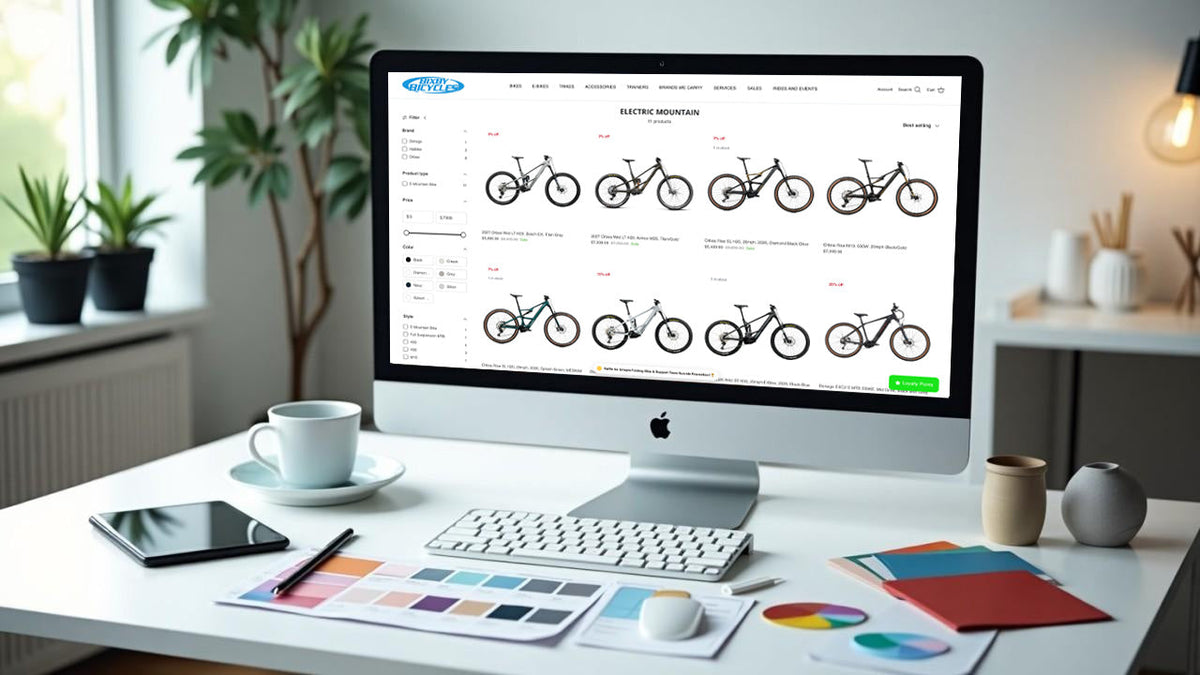
For example, a bicycle retailer may organize products by road bikes, mountain bikes, electric bikes, accessories, and individual brands. A home décor store may organize products by season, category, or designer.
Thoughtful navigation can include collection menus, product filters, search functionality, and related-product recommendations.
Questions worth asking:
- Can a new visitor quickly understand what the business sells?
- Are the most important product categories easy to find?
- Do collection names make sense to customers?
- Can shoppers narrow large collections using useful filters?
- Does the mobile menu provide the same clarity as desktop navigation?
Good navigation reduces frustration and helps customers spend more time exploring products rather than trying to find them.
3. Product Pages That Answer Customer Questions
Product pages are among the most important parts of an e-commerce website.
A strong product page should provide enough information for customers to make informed purchasing decisions without overwhelming them.
Beyond the product title and price, consider including detailed descriptions, specifications, sizing information, shipping details, product images, and answers to common questions.
For technical products, organized specification tables and FAQs can make complex information easier to understand.
Real-world example: At Bixby Bicycles , product content can include detailed bicycle specifications, features, and frequently asked questions that help customers compare models and understand which bike may fit their needs.
For industrial products, the requirements are different.
On AIMS Airflow, technical fan specifications, product configurations, and request-a-quote functionality help support customers researching commercial and industrial airflow solutions.
Both examples illustrate the same principle: product information should be organized around what customers need to know.
4. Mobile Shopping Should Never Be an Afterthought
Many customers first discover a business while browsing on a phone.
A website that looks impressive on a desktop monitor may become difficult to use when viewed on a smaller screen.
Mobile design requires more than simply shrinking the desktop layout.
Menus, images, buttons, forms, and product information should be arranged for comfortable viewing and interaction.
Important mobile considerations include:
- Readable typography without excessive zooming
- Buttons large enough to tap comfortably
- Product images that display clearly
- Navigation that doesn't overwhelm the screen
- Forms that are easy to complete
- Page layouts without unwanted horizontal scrolling
- Efficient loading and minimal visual clutter
Testing a Shopify website on multiple screen sizes is an essential part of development.
Customers should receive a consistent, easy-to-use experience regardless of the device they choose.
5. SEO Begins With Website Structure
Search engine optimization is often treated as something added after a website launches.
In reality, many important SEO decisions begin during website development.
Clear collection structures, descriptive page titles, useful product content, and logical internal links help search engines understand the information available on a website.
Shopify provides a foundation for managing important SEO elements, but the quality and organization of the content still matter.
Key areas include:
- Unique page titles and meta descriptions
- Descriptive product and collection content
- Clear heading structures
- Relevant internal links
- Meaningful image alternative text
- Appropriate structured data
- Logical website navigation
- Useful, original content
For local businesses, location-specific information can also help communicate where the business operates and which customers it serves.
SEO is not a one-time task. It requires ongoing attention as products, services, search behavior, and business priorities change.
6. Preparing Your Website for AI Search
Search behavior continues to evolve as customers use AI-powered search experiences to research products, compare options, and find businesses.
This creates additional reasons to make website content clear, accurate, and useful.
Traditional SEO and newer approaches often called Answer Engine Optimization (AEO) and Generative Engine Optimization (GEO) share many foundational principles.
Businesses benefit from content that clearly explains what they offer, who their products serve, and how customers can make informed decisions.
For Shopify websites, useful content may include:
- Detailed product descriptions
- Product comparison information
- Frequently asked questions
- Informative collection descriptions
- Educational blog articles
- Clear business and contact information
- Consistent product and brand details
There is no guaranteed method for appearing in AI-generated answers. However, well-organized, trustworthy content can make a website easier for both customers and search systems to understand.
7. Custom Functionality Should Support Business Operations
One of Shopify's strengths is its flexibility.
However, not every business operates like a traditional retail store.
Some businesses sell directly to consumers. Others work with wholesale customers, distributors, contractors, or companies that require custom pricing and quotes.
A successful Shopify website should accommodate these differences.
For example, AIMS Airflow required functionality beyond a standard retail shopping experience, including B2B-oriented content, membership features, technical product information, and request-a-quote workflows.
These requirements influenced how the website was organized and how customers interacted with products.
Custom functionality should solve a genuine business need rather than add unnecessary complexity.
The objective is to create a website that supports the business behind it.
8. Content and Marketing Work Together
Launching a Shopify store is an important milestone, but attracting customers requires ongoing effort.
A website becomes more valuable when supported by consistent marketing and useful content.
Email campaigns can introduce new products, promote seasonal collections, and reconnect with existing customers.
Blog articles can answer common questions and provide educational resources.
Social media can introduce customers to products, events, and the people behind a business.
At Bixby Bicycles, Janzen Designs supports the website alongside ongoing marketing activities, including email campaigns, blog content, promotional graphics, and social media posts.
This approach helps connect website development with the communication that brings customers back to the store.
Rather than treating the website and marketing as separate projects, businesses can benefit from a coordinated strategy.
9. Website Maintenance Matters After Launch
An e-commerce website is never truly finished.
Products change, inventory evolves, promotions come and go, and new functionality becomes available.
Ongoing maintenance helps keep the website accurate, organized, and aligned with the business.
Regular work may include updating products, refining navigation, checking links, reviewing mobile layouts, improving page content, and evaluating website performance.
Businesses may also need adjustments when Shopify introduces new capabilities or when third-party apps and theme updates affect existing functionality.
At Janzen Designs, many client relationships continue well beyond the original website launch.
That ongoing collaboration allows websites to evolve alongside the businesses they support.
10. Measure What Matters
A beautiful website is valuable, but understanding how visitors use it is equally important.
Shopify analytics and other measurement tools can help businesses evaluate customer behavior and identify opportunities for improvement.
Useful measurements may include:
- Website traffic and traffic sources
- Product and collection engagement
- Conversion rate
- Average order value
- Checkout behavior
- Returning customer activity
- Email campaign performance
No single metric tells the entire story.
A store with a specialized, high-value product may have different goals from a retailer selling frequently purchased accessories.
The most useful measurements are those connected to the business's objectives.
Reviewing performance over time can help guide decisions about design, content, marketing, and website improvements.
The Most Successful Shopify Websites Are Built With Purpose
There isn't one design, theme, or collection structure that works for every business.
A successful Shopify website reflects the brand, supports the customer, and accommodates the practical needs of the company operating it.
Thoughtful design creates a strong first impression. Clear navigation helps customers find products. Detailed content supports purchasing decisions. SEO improves discoverability, while ongoing marketing and maintenance help the website remain useful over time.
At Janzen Designs, we approach Shopify development as a combination of creative design, technical problem-solving, and long-term business support.
Let's Build Something That Works for Your Business.
Planning a new Shopify website or considering a redesign? Janzen Designs combines creative design, custom Shopify development, SEO, and ongoing support to help businesses build a stronger online presence.
Let's Talk About Your Project